
Colegio de España Review – Learn Spanish in Salamanca
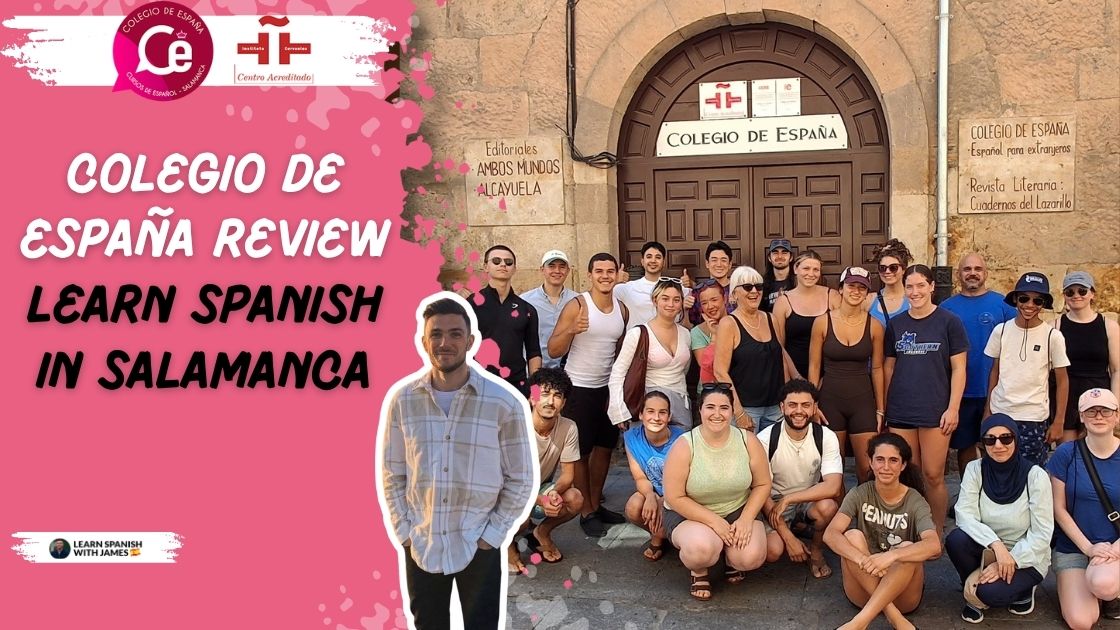
As someone who’s lived, studied, and taught Spanish in Spain, I know how much the school you pick can shape your entire experience abroad. Salamanca has been on the radar of Spanish learners for decades, and if you’re searching for the best Spanish immersion program in Salamanca, there’s one name that keeps coming up: Colegio de España.
I put together this Colegio de España review because Salamanca itself is such a strong choice for anyone who wants to learn Spanish in Salamanca – it’s a university city, the Spanish spoken there is famously clear, and the international student scene means you’re speaking the language constantly, not just in class.
You don’t have to hunt for chances to practise; they come to you while you’re ordering a coffee, doing the weekly shop, or just spending the afternoon with other students.
But a great city only gets you halfway there. The school you choose is what decides whether you end up just attending classes or actually feeling part of the city. And after looking into what Colegio de España offers, I think it’s genuinely one of the strongest options in Salamanca.
About Colegio de España
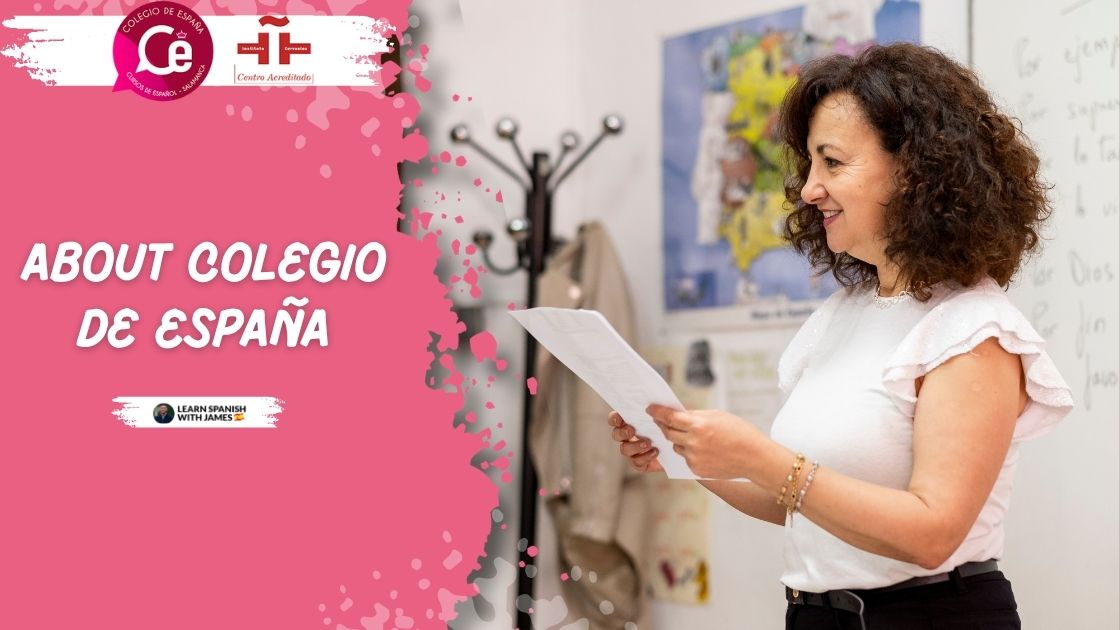
Colegio de España has been welcoming international students since 1973, which puts it among the more established Spanish schools you’ll find anywhere in the country.
Over five decades, it’s taught everyone from university students and exam candidates to professionals, retirees, and full exchange groups.
You should always look for that kind of longevity when picking a school abroad – it usually means the teaching methods have been tested and refined over years, not just written up for a brochure.
Location in the heart of Salamanca
The school is based in a historic building dating back to the 17th century, right in the centre of Salamanca. For learners, that’s genuinely useful: everything in Salamanca is walkable, so bumping into classmates, grabbing a coffee, or wandering into the old town after class is part of daily life rather than something you have to plan for. I think that’s exactly the kind of environment that makes a language stick.
Small class sizes for personalised learning
One thing that stood out to me straight away is the class size. Groups are capped at 12 students maximum, which is small enough that nobody can coast along in silence at the back of the room.
If you’ve followed me for a while, you’ll know I’m a big believer in smaller groups – they mean more speaking time per student and teachers who can actually adjust the lesson to the room, rather than sticking rigidly to a script.
In a class that size, there’s nowhere to hide behind the rest of the group. Everyone gets pulled into the conversation, everyone ends up talking, and everyone gets the kind of individual feedback that’s much harder to give in a room of twenty or thirty students.
A reputation built over five decades
It’s worth pausing on that history for a second, because it matters more than it might seem. Schools operating since 1973 have adapted through very different eras of language teaching, and the ones that survive tend to be the ones that kept improving.
That’s a big part of why Colegio de España still comes up so often when people ask about the best Spanish school in Salamanca: reputation like that isn’t built overnight, and it isn’t built by a handful of good reviews either.
Spanish Courses at Colegio de España
Intensive Spanish courses for faster progress
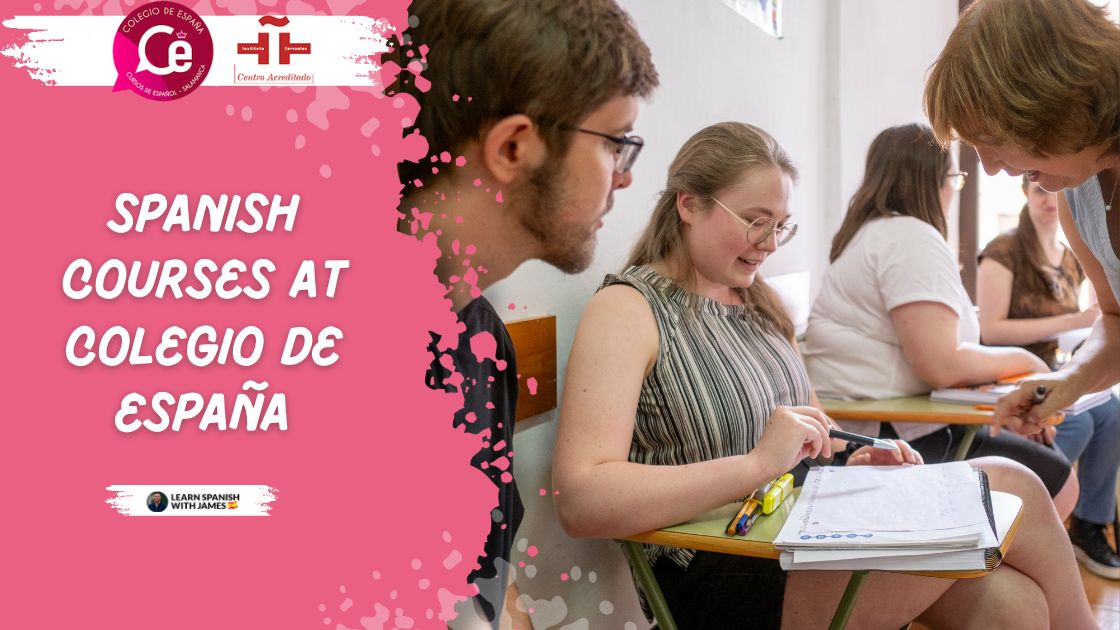
If your goal is to learn Spanish in Salamanca quickly, the school’s Intensive Spanish Language Course is the one to look at. It’s built for students who want to move through the levels at a proper pace, with classes that stay communicative rather than just working through grammar drills for the sake of it.
Grammar, vocabulary, listening, and writing are all in there, but the actual point of every class is to get you using the language – debating, problem-solving, working in pairs – not just filling in worksheets.
DELE and SIELE exam preparation
Colegio de España is an official DELE and SIELE examination centre, which matters a lot if certification is part of your plan.
It means you’re preparing with teachers who know the exam format and marking criteria first-hand, rather than teachers guessing at what the exam board wants.
A program for every kind of student
What I like about this school is that it doesn’t assume everyone fits the same mould. Alongside the intensive courses, there are long-duration programs, teacher-training courses, summer courses, and tailor-made programs for universities and institutions.
There’s also a dedicated Junior Program for students aged 13–17, which is worth knowing about if you’re looking into options for a teenager rather than yourself, and a Spanish Program for Seniors aimed at learners over 50 who want to study Spanish for the pleasure of it, without the pressure of an academic deadline.
It’s not something every language school bothers to offer, and I think it says a lot about how the school thinks about its students.
Teaching Approach and Methodology
Experienced, specialised teachers
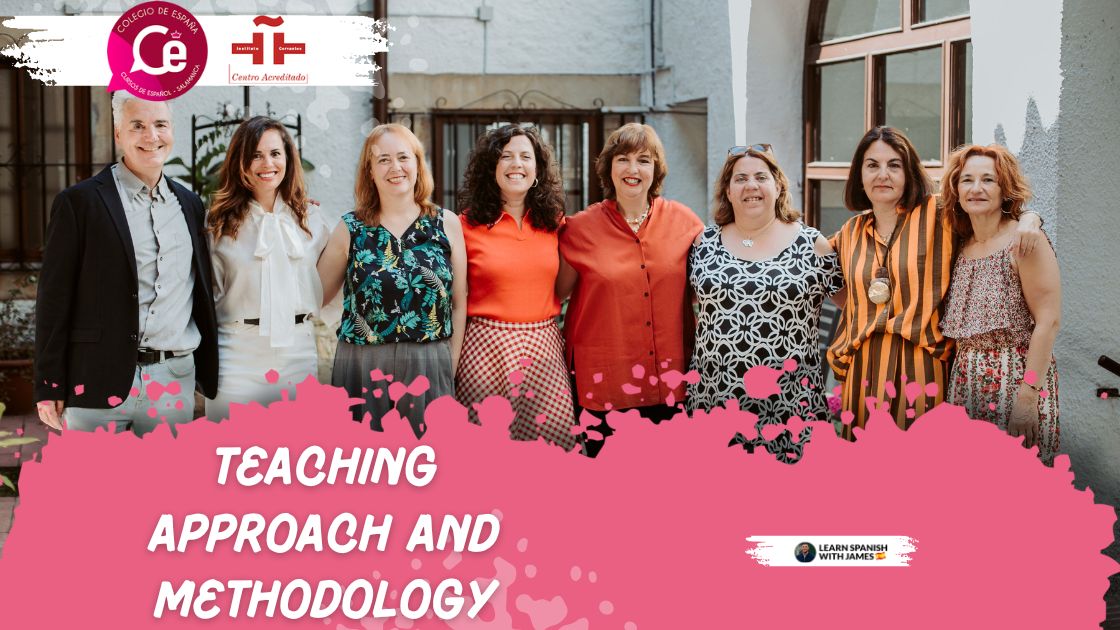
Every teacher at Colegio de España specialises in teaching Spanish as a foreign language, and some have more than thirty years of experience working with international students.
Learning a language means making a lot of mistakes along the way, so having teachers who know when to correct you and when to just let the conversation run is genuinely more important than people give it credit for.
Communicative, real-world Spanish
Classes lean heavily on actually using the language – talking through everyday situations, working through small challenges together, and treating Spanish as a tool rather than a subject to memorise. That’s the same principle I push whenever I talk about how to actually get fluent: real usage beats rote study every time.
Modern methods inside a historic building
There’s a nice contrast at play here. Students walk into a 17th-century building every morning, but the teaching itself uses current methodologies and digital resources designed to keep the class participative. It’s a good mix of tradition and a genuinely modern classroom experience.
Student Life in Salamanca
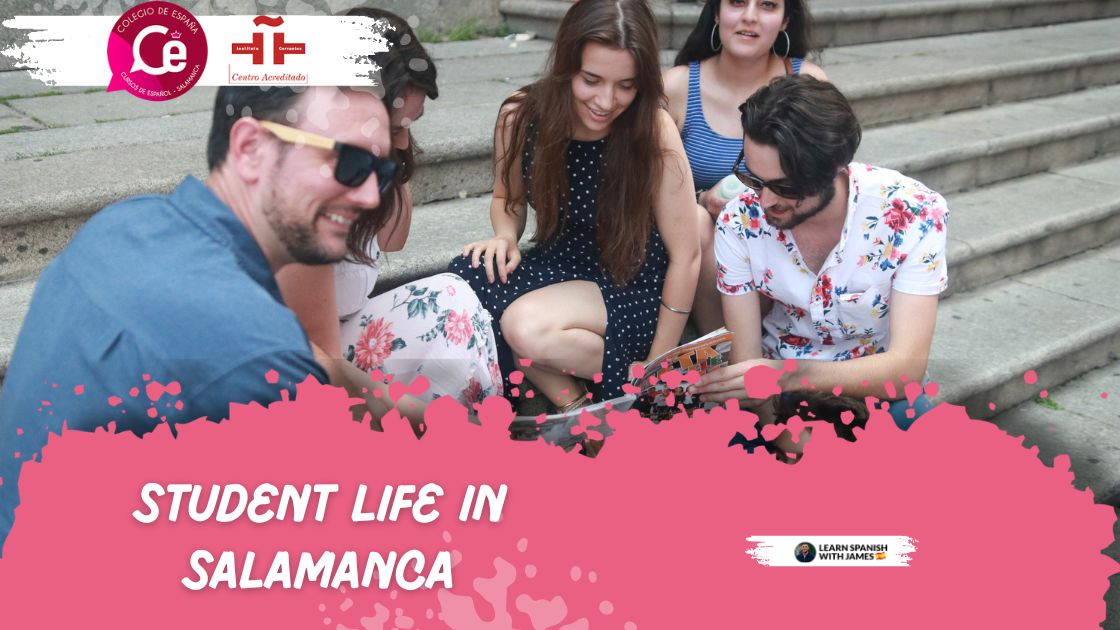
One of the biggest advantages of choosing Salamanca is how much learning happens outside the classroom. Some of the most useful hours of the week aren’t even on the timetable – they happen after class ends, wandering the historic centre with classmates from three or four different countries, on a cultural visit, over tapas, or chatting with a host family at dinner.
That’s one of the real advantages of studying in a city like Salamanca rather than somewhere much bigger. Everything is close together, so you’re constantly bumping into people you know and using Spanish without really thinking about it.
The school’s cultural activities programme leans into this directly – it’s not just about ticking off the local sights or trying the food, it’s about creating situations where Spanish stops being a school subject and becomes the language you actually use to get on with people.
If you’re weighing up your options, I think this is one of the clearest reasons Colegio de España comes up so often as the best Spanish school in Salamanca: it’s not just about the hours in the classroom, it’s about how naturally the rest of your day supports what you’re learning.
Who tends to study here
What I also like is that the school doesn’t seem to be built around one type of student. Every year the classrooms fill up with university students, working professionals, Spanish teachers looking to sharpen their own skills, DELE and SIELE candidates, retirees learning purely for the pleasure of it, and international groups combining lessons with cultural trips.
That range shows up in the course catalogue too – it’s less a case of “one path fits all” and more a school that tries to meet you wherever you happen to be in your Spanish journey.
Final Thoughts
If you’re comparing options and want a school with real history, small classes, and teachers who genuinely specialise in teaching Spanish to foreigners, I think Colegio de España is well worth putting near the top of your list. Over fifty years of experience, official DELE and SIELE accreditation, and a range of programs that cover everything from teenagers to retirees make it one of the more complete options I’ve come across.
Add in a location you can’t beat – a historic building right in the middle of one of Spain’s most student-friendly cities – and it’s easy to see why this school keeps showing up whenever people ask where to learn Spanish in Salamanca.

About James – Or Should that be Santiago?
My name is James. I am a Brit with a love for the Spanish language. I have lived in Spain, Argentina, and Costa Rica, and I have been teaching Spanish for over a decade. This site will show you how to master the elements of Spanish grammar that often dishearten learners. I hope you enjoy the site and find it useful.
If you are interested in taking your Spanish to the next level, check out the Courses section for a full list of the Spanish courses I suggest. All reviews are based on my personal opinions.