
How to Progress From A1 to B2 Using the Alsystema Method
How to Progress From A1 to B2 Using the Alsystema Method
For years I’ve had the same conversation with new students: they’ve been using language apps for ages, dipping in and out of YouTube videos, saving vocab lists on their phones…
and yet nothing seems to stick.
If you’ve ever found yourself wondering, “Why can’t I learn a language after years of apps?” you’re not alone. I hear this constantly, and I’ve felt the same frustration in other languages I’ve tried to learn myself.
The internet was supposed to make language learning easier. Instead, it’s created a strange paradox: more resources, fewer learners reaching intermediate fluency.
And the more I’ve looked into why, the clearer it has become that overwhelm, not motivation, is what derails most learners.
Recently I came across a platform called Alsystema and it immediately grabbed my attention because it tackles this exact issue head-on.
It’s not another app. It’s not another subscription model. And it’s not a game.
Instead, it offers something learners desperately need but rarely get: a structured learning architecture built around how the brain actually acquires languages.
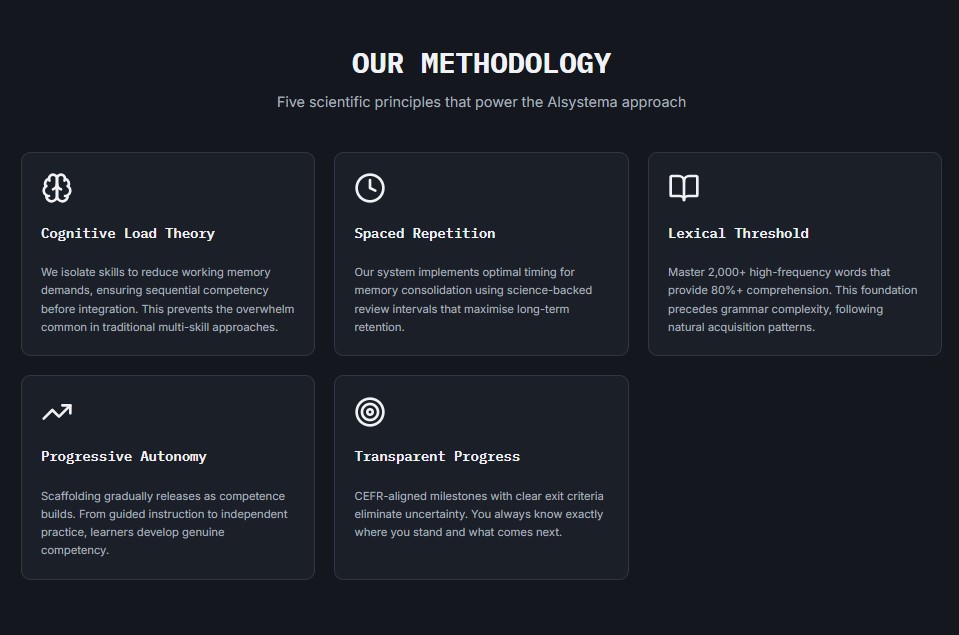
After digging into their methodology, exploring their progression system, and testing the phases myself, I want to share what stood out.
It aligns almost perfectly with what I’ve been teaching on Learn Spanish With James for years: clarity, autonomy, and sustainable, science-based progress.
Go from A1 to B2 fluency with Alystema
Why Most Learners Get Stuck Before Intermediate Level
Whether you’re learning Spanish or any other language, most learners follow the same pattern:
- Start strong
- Download some apps
- Watch videos
- Save vocab lists
- Mix ten different learning strategies at once
And then… progress stalls. 😴
That’s when the questions show up:
- Why am I stuck at A2 level?
- Why do I understand some things but can’t speak confidently?
- Why do I keep forgetting vocabulary I “learned” months ago?
The reason usually isn’t discipline or intelligence. It’s cognitive overload.
Most apps teach everything at once. That means grammar, vocabulary, reading, speaking, listening, without any intentional sequencing.
It’s like trying to build a house by working on every room simultaneously instead of laying a foundation.
This is why so many people spend years using apps but never reach intermediate fluency.
It’s not that the apps are bad. They’re simply not designed to take you from A1 to B2 efficiently.
Why Alsystema Made Sense to Me
When I started looking into Alsystema, what caught my attention wasn’t flashy visuals or gamified features. It was the methodology.
Their progression system is built around cognitive science, CEFR skill requirements, and even the same foundational research behind the Foreign Service Institute (FSI) hour estimates, the closest we have to “real data” on adult language acquisition.
Here’s what stood out.
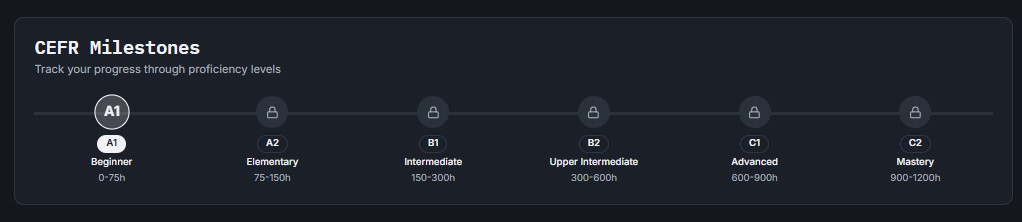
A Clear, CEFR-Aligned Learning Architecture
Alsystema doesn’t just hand you tools,it lays out a full, structured system that takes you from A1 to B2 through six well-defined phases.
Each phase focuses on a specific skill area so you’re never juggling too many cognitive demands at once.
If you’ve ever struggled with “too many resources, not enough direction,” this is the antidote.
It’s the clearest self-directed learning structure I’ve ever seen outside of formal academic programs.
The Six-Phase Skill Development Model
Each phase exists for a reason, and each one builds on the last.
Here’s how the phases work in practice:
Vocabulary Phase 🧠
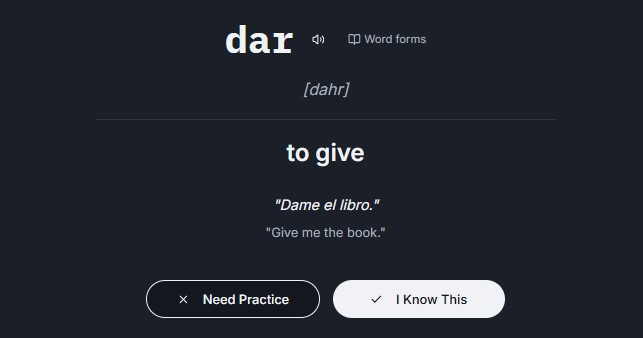
This stage uses spaced repetition principles and an algorithm similar to SM-2 to schedule reviews when your brain actually needs them.
It’s not about memorising lists,it’s about long-term retention.
Grammar Phase 🔤
Instead of passive memorisation, you get targeted, contextual grammar exercises.
AI-powered feedback helps you correct mistakes in real time while spaced repetition reinforces patterns until they stick.
Reading Phase 📖
You work with texts appropriately levelled to your CEFR stage.
You’re exposed to authentic language, not artificial textbook sentences, and the system helps you track your comprehension as it grows.
Listening Phase 👂
This uses timed listening exercises with native audio to train your ear to recognise natural rhythm, pace, and speech patterns.
This is crucial if you’ve ever felt like “I can read it, but I can’t understand it when spoken.”
Speaking Phase 🗣️
Timed speaking prompts force you to produce language under gentle pressure, building real fluency through deliberate practice rather than “repeat after me” exercises.
Writing Phase ✍️
You produce structured writing samples and receive detailed AI-driven feedback on structure, vocabulary accuracy, and grammar.
It’s like having a writing coach built into your study routine.
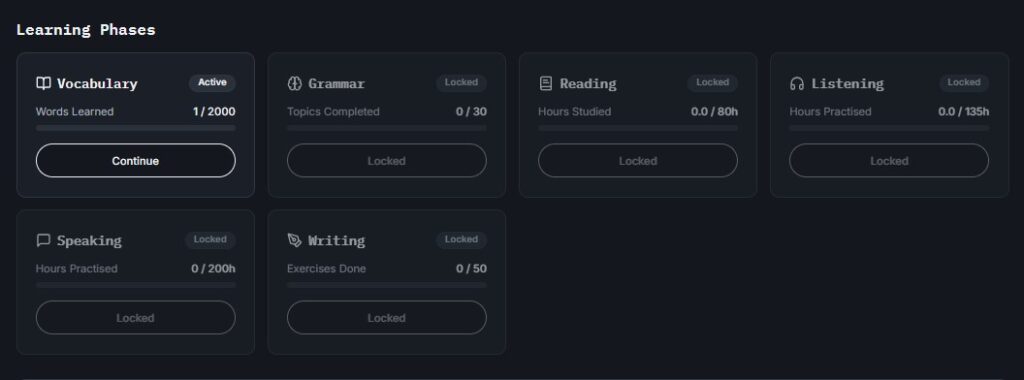
This multi-phase structure prevents the overwhelm that derails most learners and gives your brain exactly what it needs at each stage of the journey.
Analytics That Actually Show You Where You Stand
One feature I was genuinely excited about is the analytics dashboard-something you don’t really see in other language platforms. As someone who’s always been a bit data-obsessed (in a healthy way, I promise), I love being able to see my actual progress broken down by skill area.
Are you crushing vocabulary but struggling with listening? The analytics will show you that. Have you been avoiding speaking practice?
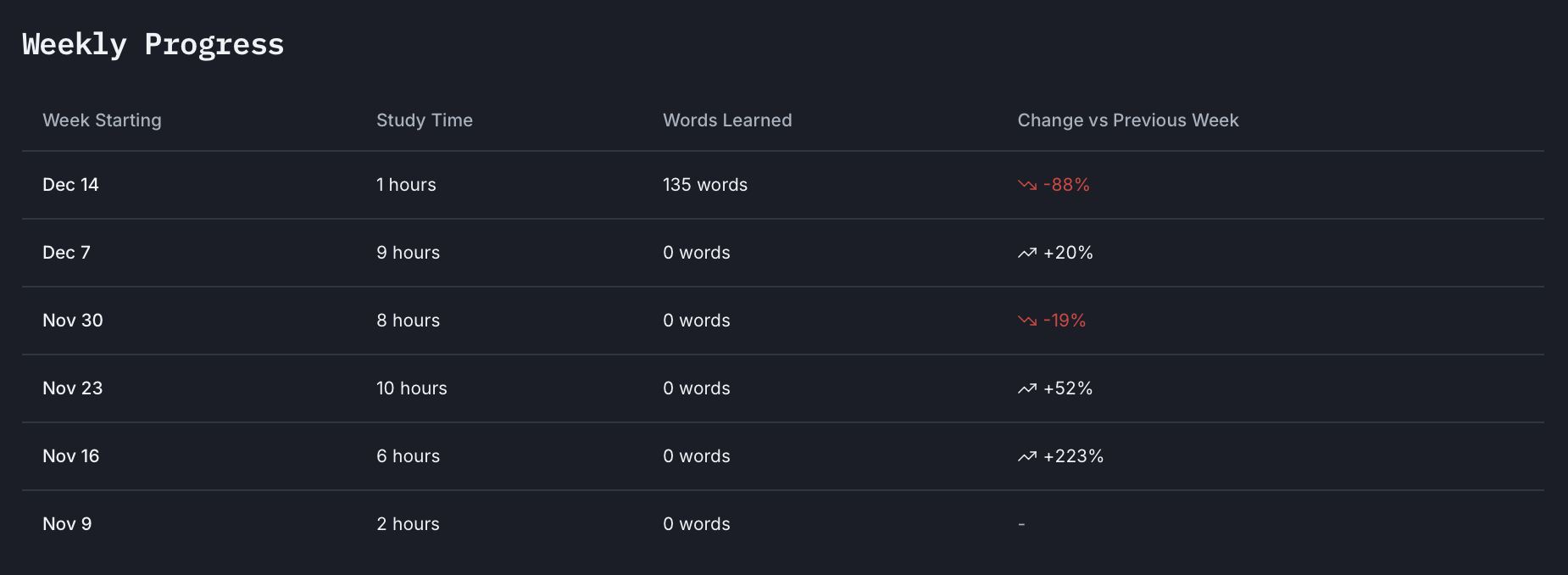
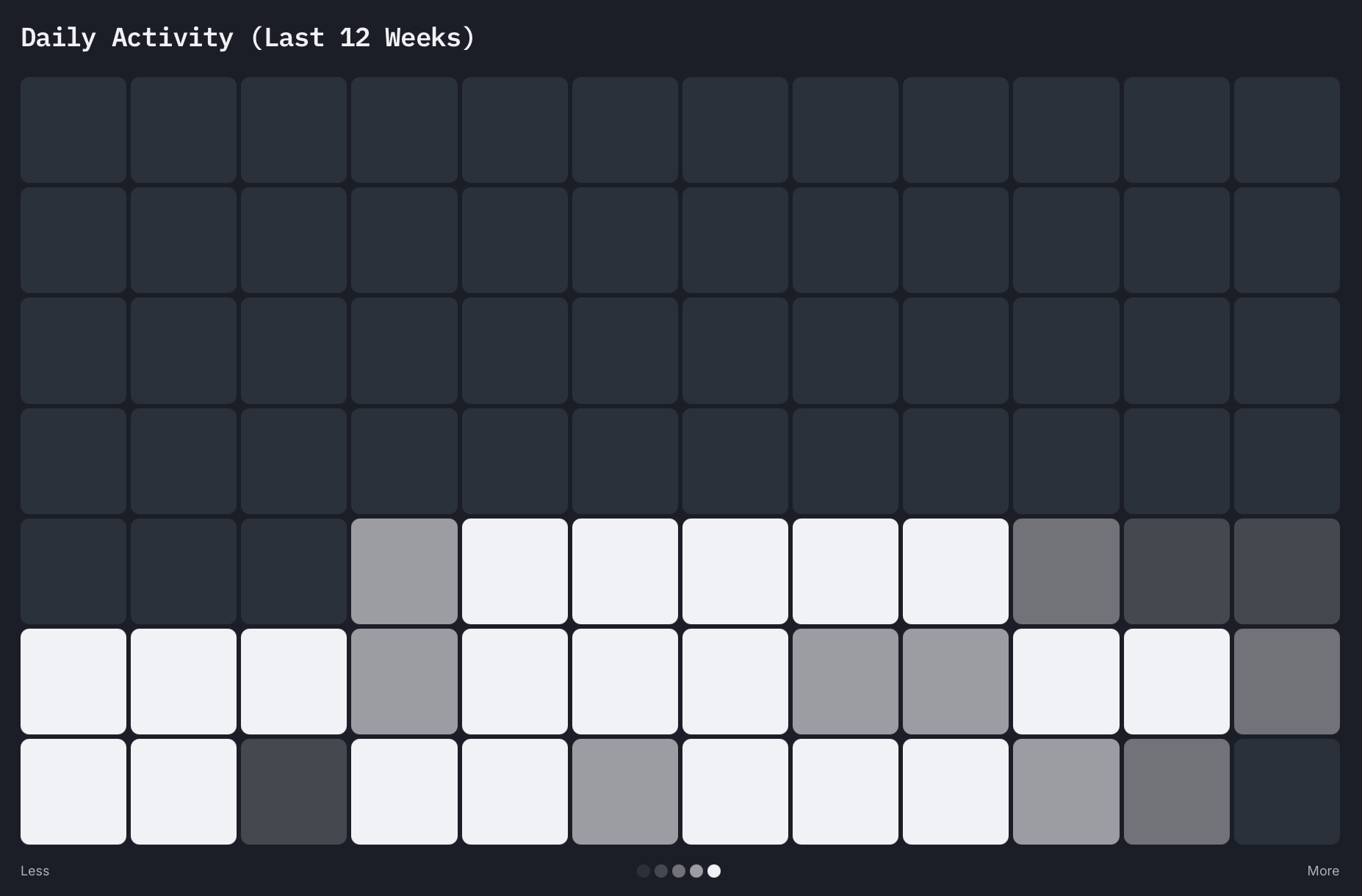
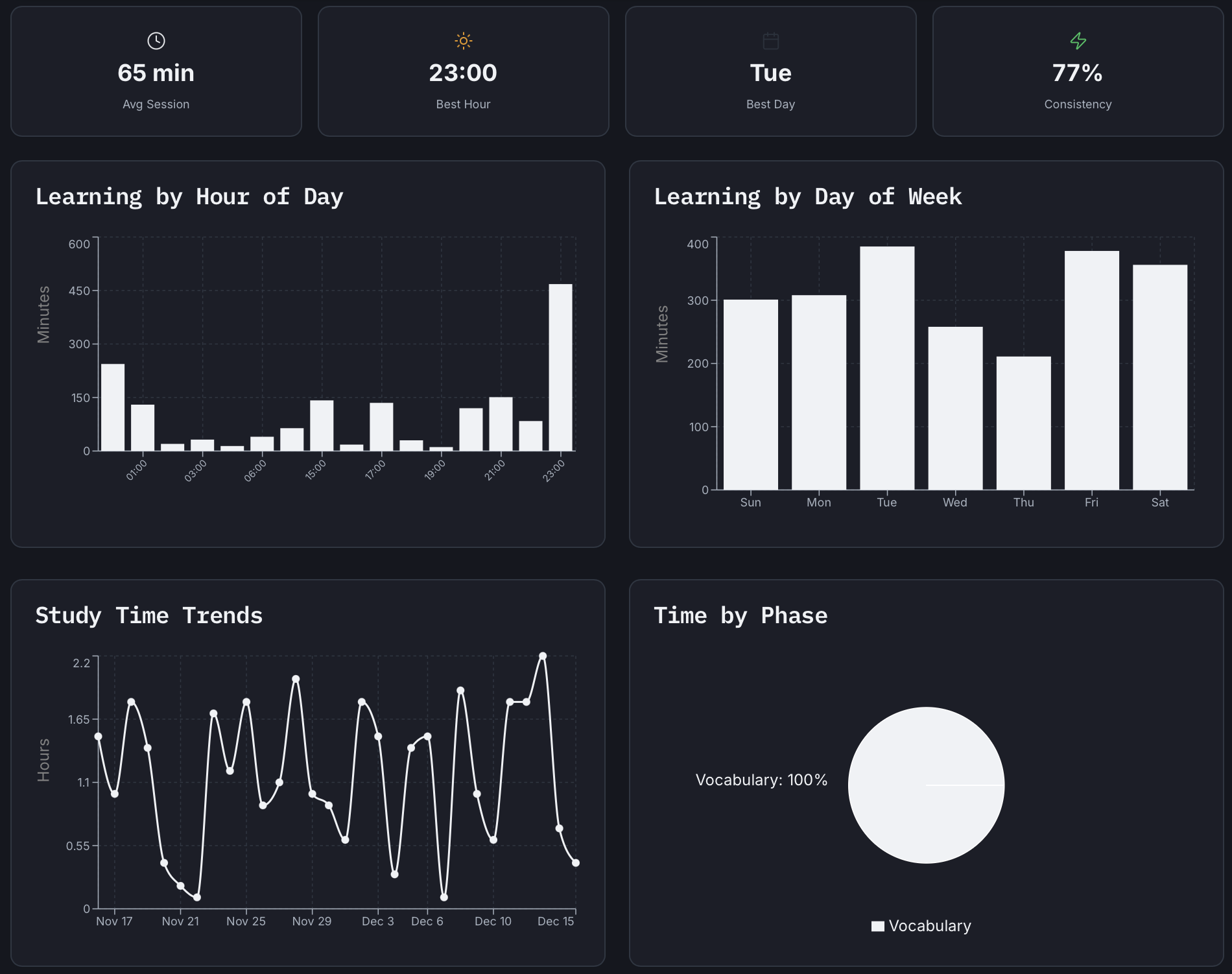
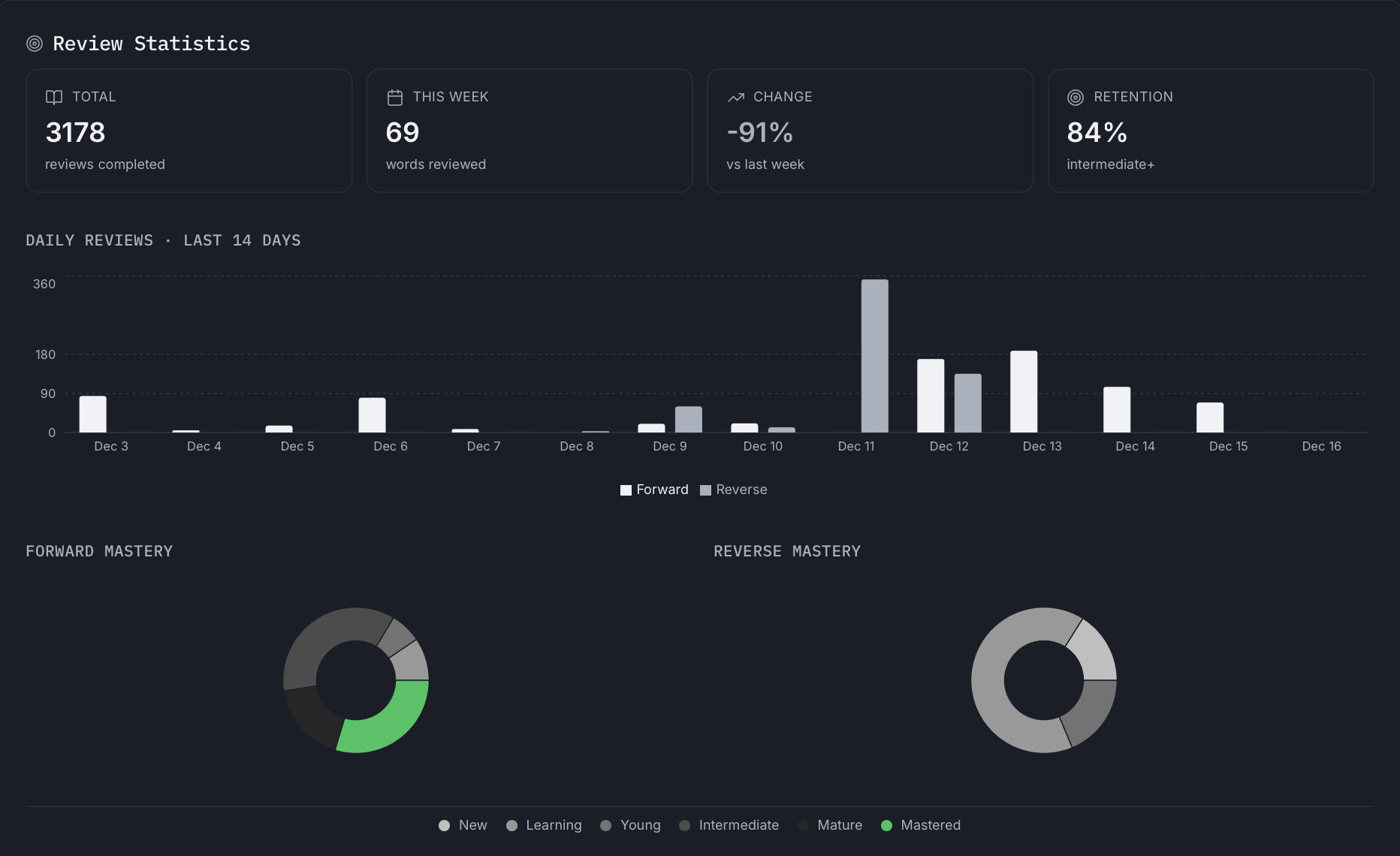
Yeah, it’ll call you out on that too. It’s not about making you feel bad, it’s about giving you real visibility into where your time is actually going and where you need to focus next. For learners who’ve been stuck wondering “am I even improving?”, this kind of feedback is gold.
👉 Why the Goal Is B2 (Not C2)
One thing I appreciated was their explanation of why the system targets B2 rather than “native-like proficiency.”
B2 is the threshold where you gain productive independence,you can function, communicate, problem-solve, hold conversations, and operate in real life without constant support.
It’s the point where most learners feel fluent in everyday terms.
C2 is a different category entirely.
It involves near-native nuance, professional-level writing, and cultural depth that most learners don’t actually need for personal or professional goals.
B2 is the sweet spot where effort meets payoff.
The Placement Test: Start Where You Actually Are
Here’s a feature that’ll save you loads of time if you’re not a complete beginner: the placement test. Alsystema’s placement test figures out your actual level and lets you jump straight into the appropriate phase.
It’s perfect for those of us who learned some Spanish in school, travelled a bit, maybe watched some shows, but never quite broke through to the next level.
You can finally pick up where your skills actually are instead of pretending you need to start from zero.
Learning Alongside Friends (Without the Competition)
I’ll be honest: I’m not usually a fan of the “leaderboard” approach to language learning because it can feel a bit too competitive. But Alsystema’s friends feature is different.
You can add your mates and see what languages they’re learning and how they’re progressing, but it’s more about community and accountability than competition.
It’s like having a gym buddy for your brain. You can check in on each other, share milestones, and keep each other motivated without the pressure of rankings.
Plus, there’s something quite motivating about seeing your friend hit B1 level, it reminds you that real progress is actually possible when you stick with it.
Transparent Value & Pricing
I want to be extra clear: what impressed me wasn’t just the method, but also the transparency.
Alsystema explains exactly what you’re paying for:
- A full end-to-end methodology
- AI-enhanced practice
- CEFR-aligned progression
- Lifetime access
- Tools designed around cognitive load and adult learning science
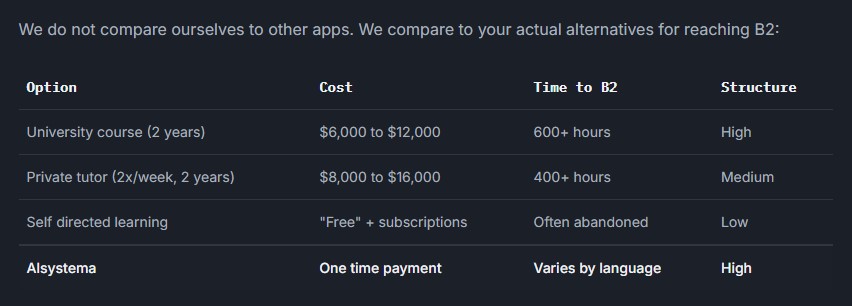
And they benchmark their pricing against FSI research hours and other market alternatives, which was refreshing to see.
It’s not a subscription treadmill designed to keep you paying forever. It’s a one-time investment in a full system.
Try Alsytema today
How Does Alsystema Help You Progress From A1 to B2 Efficiently?
Good question. Here’s the simple version:
Phases 1–2:
Build comprehension, vocabulary foundation, and grammatical intuition.
Phases 3–4:
Shift from comprehension to controlled production: writing and speaking in a structured environment.
Phases 5–6:
Develop fluency, spontaneity, and productive independence.
It doesn’t rush you, but it removes the decision fatigue that usually slows learners down. You don’t choose what to study each day,the system guides you.
This is what makes learners progress faster: not speed, but clarity.
My Honest Impressions (The Good and The Not-Perfect)
What I genuinely liked
- The methodology is actually grounded in cognitive science.
- The structure eliminates overwhelm,this alone is worth a lot.
- Clear progression markers keep you oriented at all times.
- The skill sequencing matches what I’ve seen work best in real learners.
- Lifetime access gives adult learners the flexibility they need.
What might not be for everyone
- It isn’t flashy or gamified.
- It requires real focus; it’s not a “tap-for-10-minutes” app.
- It prioritises learning efficiency over entertainment.
But overall? I think it fills a real gap in the language-learning world by providing a serious, structured system for learners who are tired of spinning their wheels.
FAQs About Alsystema
Below, you’ll find some answers to frequently asked questions about Alsystema and the Alsystema method.
Is Alsystema good for beginners?
Yes. It starts at A1 with comprehension-first training so you don’t get overwhelmed early on.
Can it help if I’m stuck at A2?
Absolutely. The A2 plateau is exactly where structured progression becomes essential.
Does it help you reach intermediate fluency faster?
Not by cutting corners,but by removing confusion. You move faster because you’re finally following a coherent system.
Is Alsystema only for Spanish?
No. It’s language-agnostic. You bring your own language and the system provides the architecture.
Is it a subscription?
No, it’s a one-time payment.
Is Alsytema better than Duolingo?
Yes and no. We’re not comparing like-for-like here. Duolingo is great for fun or casual learners. Alsystema is for people who want a structured, research-based route to B2.
Conclusion: Structure Beats Abundance Every Time
If you’ve ever asked yourself:
 Why can’t I learn a language after years of apps?
Why am I stuck at A2 level?
How do I reach intermediate fluency faster?
How do I progress from A1 to B2 efficiently?
The real issue probably isn’t motivation. It’s structure.
The biggest insight I’ve gained from exploring Alsystema is that serious learners don’t need more content,they need a framework.
A clear, step-by-step progression that aligns with how the adult brain actually learns.
Alsystema won’t study for you, but it will finally give your brain a system it can work with.
And for many learners, that’s the missing piece.
If you want to explore it yourself, click the button below.
And whether you use it or not, I’m here to help you build the clarity and confidence you need on your language-learning journey.
Check out Alsytema and see how it can boost your progression.